
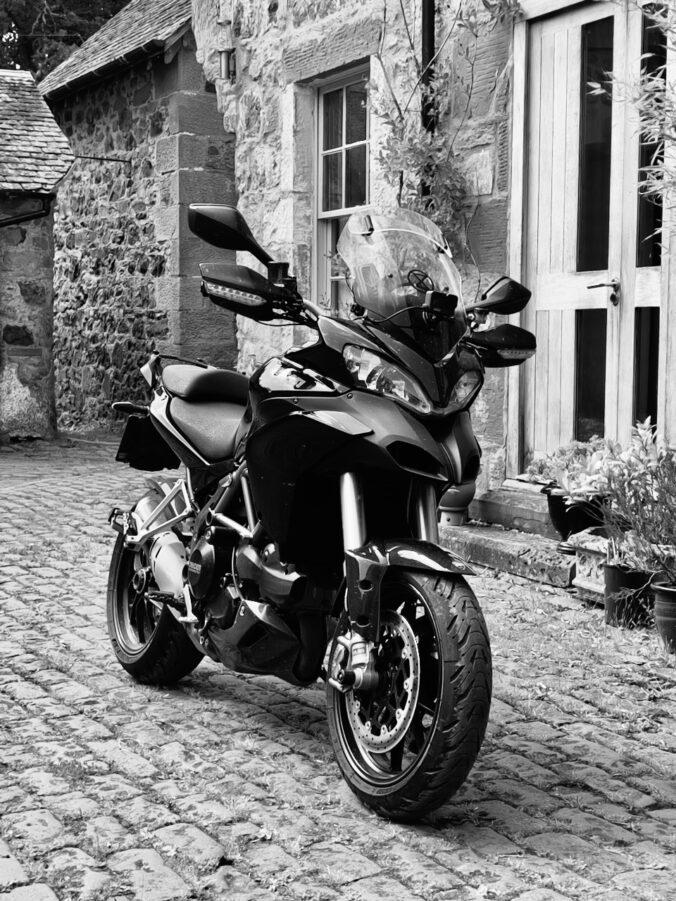
This is what you might genuinely call a long-term test. A really long-term test: When I bought one of the first 1200S Multistradas, back in May 2010, I had precisely zero idea that I’d still have it, sixteen years later.
Why? Well, I don’t change my vehicles unless I see a significant step up in some aspect that really matters to me. Posing value, new toy vibes, top speed and general bling simply don’t do it for me. What I do after buying a bike or car (mostly the former) is to carefully tweak it over a few years to suit just how I want it to be. And, once, I’ve got it there, I really don’t want to be bothered changing things. But sixteen years is going it some, even for me.
So it’s worth a bit of a retrospective, covering the good, the bad and indeed the ugly. I’ve however only covered 24,000 miles on the thing: less than half of the mileage I’d put on my ST4s in half the time.
That’s down to a number of factors (besides indolence, of course…): I’ve spent a fair bit of time working abroad, I’ve had a choice of other vehicles to use, there of course was Lockdown and, not least, there is the simple fact that, now living 500 miles further north (and further from the ferries to civilisation), we’ve had the occasional real winter, something not entirely conducive to hooning around on two wheels. So motorcycling is definitely more seasonal in the Highlands, as am I.
The Good
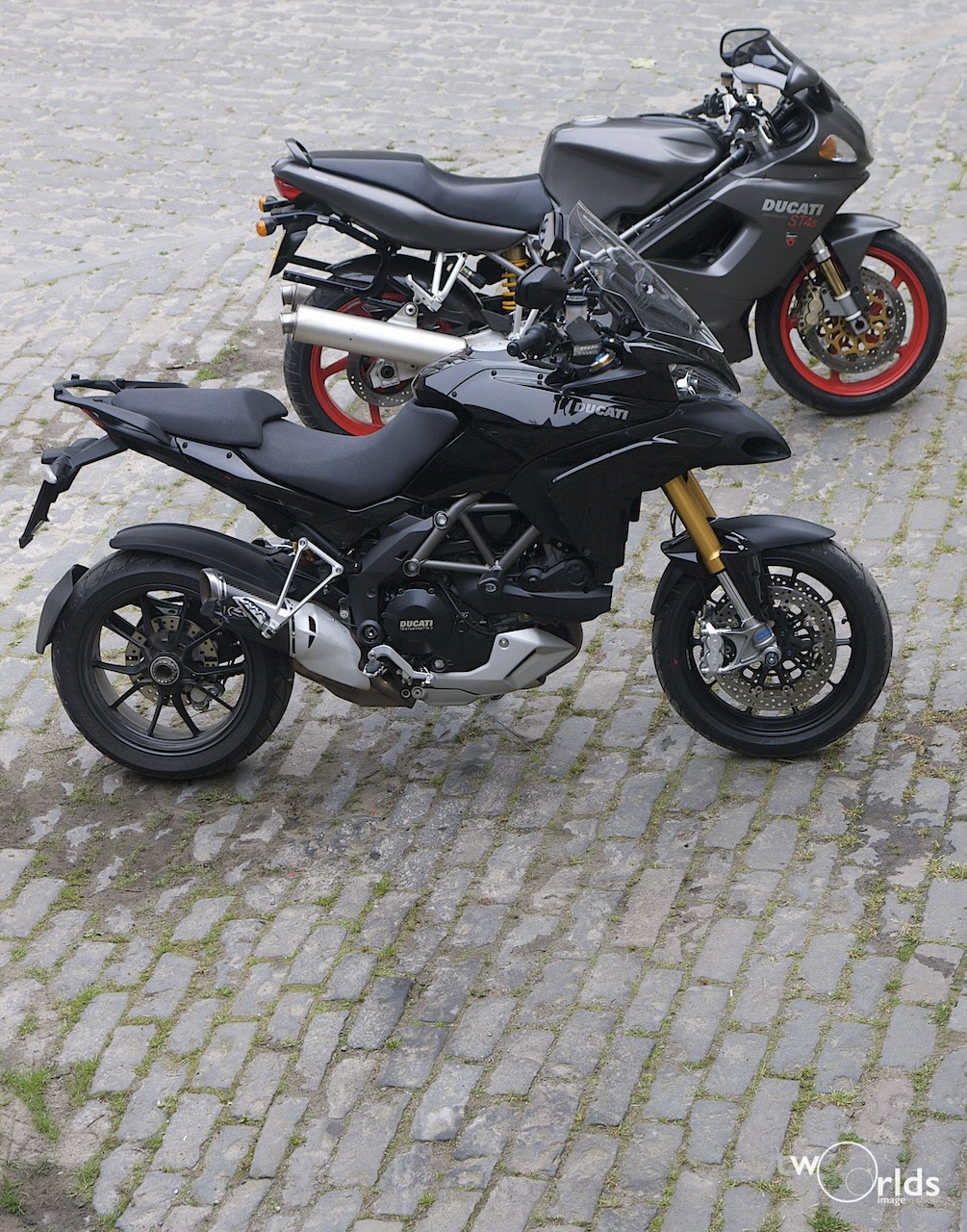
The Good has mostly been very good: the bike is a pleasure to ride and, once properly set up, is both agile and responsive. It manages to retain the all-important front-end feel that is core to the Ducati experience and an initial tendency to run wide on bend exits was quickly fixed by setting up the suspension properly (and see Part II: Mods).
After getting used to the extra bulk (height and width more than weight) compared to my ST4s, I gelled with the bike pretty quickly: the wide bars give a lot of leverage (too much at times for anyone used to sports bikes) for fast turn ins and, fortunately, the bike is very happy to honour that sort of command input. I’ve ridden every generation of Multistrada since and, in comparison, it’s definitely twitchier – although very stable – and does the ‘eager puppy’ bit more enthusiastically. I like that – I’d rather have a sports tourer that requires a modicum of care on control inputs than an input-dampening barge that doesn’t so much turn as tack.
The same applies to the engine: until the 1260 came along, I found that the interim engine generations (Twin Spark and DVT 1200) lacked the sort of seamless grunt that I was used to – both had mid-range holes in power delivery and didn’t offer the sort of hooligan brio that makes the original so compelling.
Of course, my having geared mine down with an additional two teeth on the rear sprocket has helped as well, and made town riding, always a weakness on V-twins, more palatable. It also turns top gear into a usable gear rather than a motorway-only overdrive. The only time I considered a change was after riding a 1260: a lovely engine, but the longer wheelbase, whilst definitely improving stability for touring, meant that the bike felt just a little less lively and responsive. So I stuck with what I had.
The engine & suspension modes mean that Mr Jekyll and Dr Hyde are both immediately on hand: Touring mode is great for relaxed but quick progress without the pillion doing involuntary nodding dog impressions, and sport mode is perfect for playing with the twisties. I also use Enduro mode for bimbling up the single track road and dirt track to home. Urban mode I’ve repurposed to several modes of manual suspension configuration.
The Bad
Not that much. Which may come as as surprise to those who hold to the “Unreliable Ducati” Shibboleth. i wasn’t however surprised, given that I’ve owned Ducatis since 1983, have put a couple of hundred thousand miles on the things and have only twice been left at the roadside by an issue (my Pantah broke a piston ring in 1984 and my ST4s had a run-in with a corroded ECU connector in 2009).
Very little has gone wrong with it, limited to:
- The key proximity sensor needed replacing quite early on (warrantied), so I had to spend a week or two starting it with the PIN. Which was a bit of a pain;
- The clocks failed at 7000 miles and were replaced under warranty. I just have to remember to add on the 7k when logging services and to MoT records (Test stations will only record what they see on the clocks);
- The front ABS sensor line being doubled over and clipped by the factory under the beak, ensuring that it fatigued and broke after a few years. Easy fix, and common enough that it’s a quick diagnosis;
- The radiator internals collapsed after about six years, sending temperatures through the roof unless I beetled along at, “Really, Officer – Gosh…” speeds. Ducati UK however goodwilled the replacement. I suspect poor Chinese/Italian/Martian quality control;
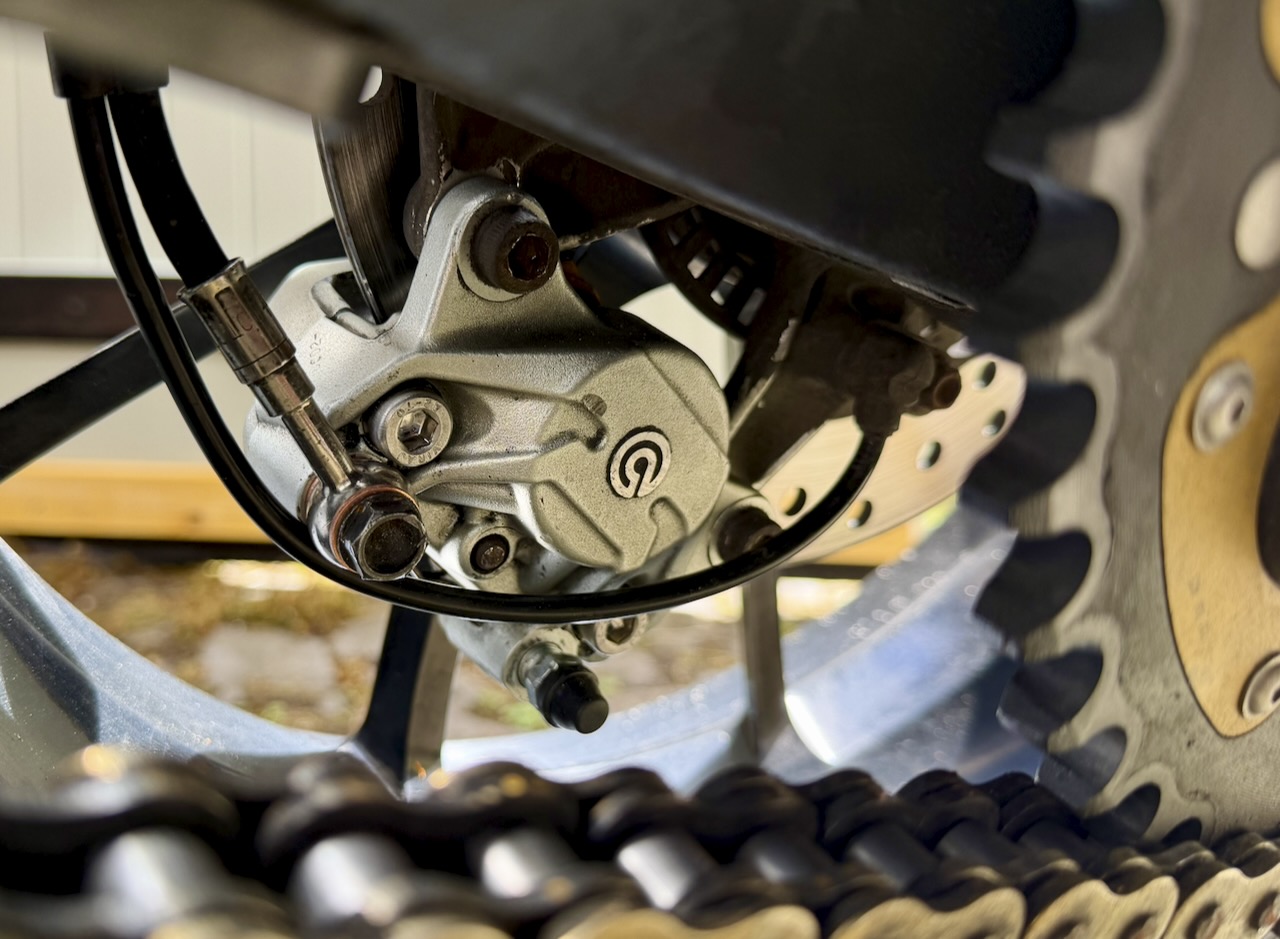
- The back brake. This is a Ducati back brake, so requires patience, determination and the sacrifice of a small chicken before it will deign to bleed. And then work for a week or so, before again losing the will to live, requiring more chickens thereafter. I’ve just rebuilt the rear caliper with new pistons and seals and have gone through nearly an entire container of RB660 fluid trying to get the air out of the ABS system. And that’s after fitting the recommended bleed nipple to the ABS unit;
- There have been a small number of recalls, for the back brake (hah!), to replace an Öhlins fork leg, and to upgrade the fork seals (which are always a bit of a consumable for Öhlins);
- Of course, the verdammt exhaust valve (only introduced to meet drive-by noise testing requirements) seized after a couple of years, despite regular TLC. That is now disconnected, locked open and with a neat little Duc-EE electronic bypass chip which stops the ECU whining about things;
- Fortunately, mine hasn’t suffered from the expensive (but warrantied) porous heads problem which affected a number of the early bikes;
- The fuel level senders on these bikes are notorious for expiring, and Ducati has issued several generations of of updates for this part. Mine has in fact done rather well, and its only in the last year or so that it’s started to be slow to update the readings.
I removed the centre stand within a week of getting the thing: the arm on the stand decks out on left handers if you so much as think, “Clang!” Others have had a welder shorten the arm, to good effect. I never got around to it.
I also ordered with the factory panniers and the optional large lids. The latter do hold a huge amount, but leave you prone to knocking oncoming buses into the verge. As for filtering with them. Just. Don’t. They’re also rather flimsy and don’t so much leak as act as scoops for rain, snow and passing sheep. Ducati were embarrassed into releasing a patch kit of additional latches for these, but the whole pannier design was clearly left to a drunk and disillusioned intern on a Friday afternoon.
And the headlights: these are very good to be seen by, pretty poor to see with. Dipped beam is OK, but high beam projects such a narrow beam of illumination that, on anything other than a dead straight road, it serves little purpose as a light. This unfortunately is a fundamental attribute of the lens/reflector design, so ‘upgrading’ to LED bulbs etc (as many have done and which I considered) doesn’t make a significant difference. What you can get is a wiring patch which ensures that, when you switch to main beam, the dipped beams stay on as well. That does help, somewhat – I haven’t fitted this but experimenting by holding down the headlight flasher suggests that it does.
The Ugly
Overall, it’s a dramatically good-looking bike (YOMV), in a stealthy way: the simple all black finish was, to my mind, the best paint job ever on a Multistrada, something I’ve added to with a black carbon belly pan: here at Weasel Towers, we call it The Raven – it’s big, black, beaky and has an attitude.
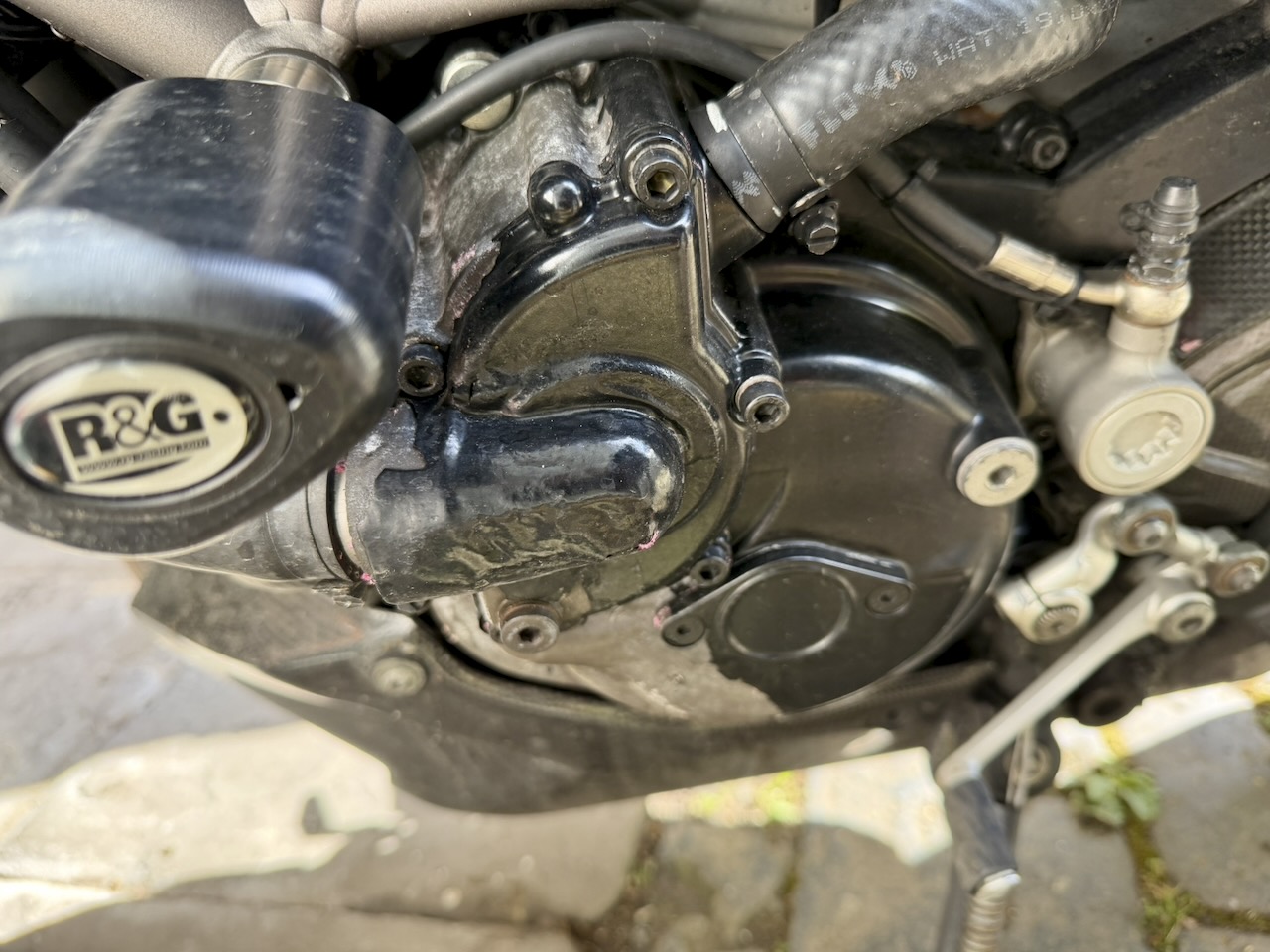
But I think this was produced when Ducati (or their supplier) was first moving to water-based paints. Whilst the bodywork paint is just fine, the left side engine case and the swing arm are rather scabby: the paint just fell off these. I did at one point manage to score a perfect condition swing arm for less than it would have cost me to have the original removed and powder coated, but that’s now gone the same way, so a winter stripdown seems to be in order, something I’ve been meaning to do for years, but which has managed to elude me.
Making it Mine
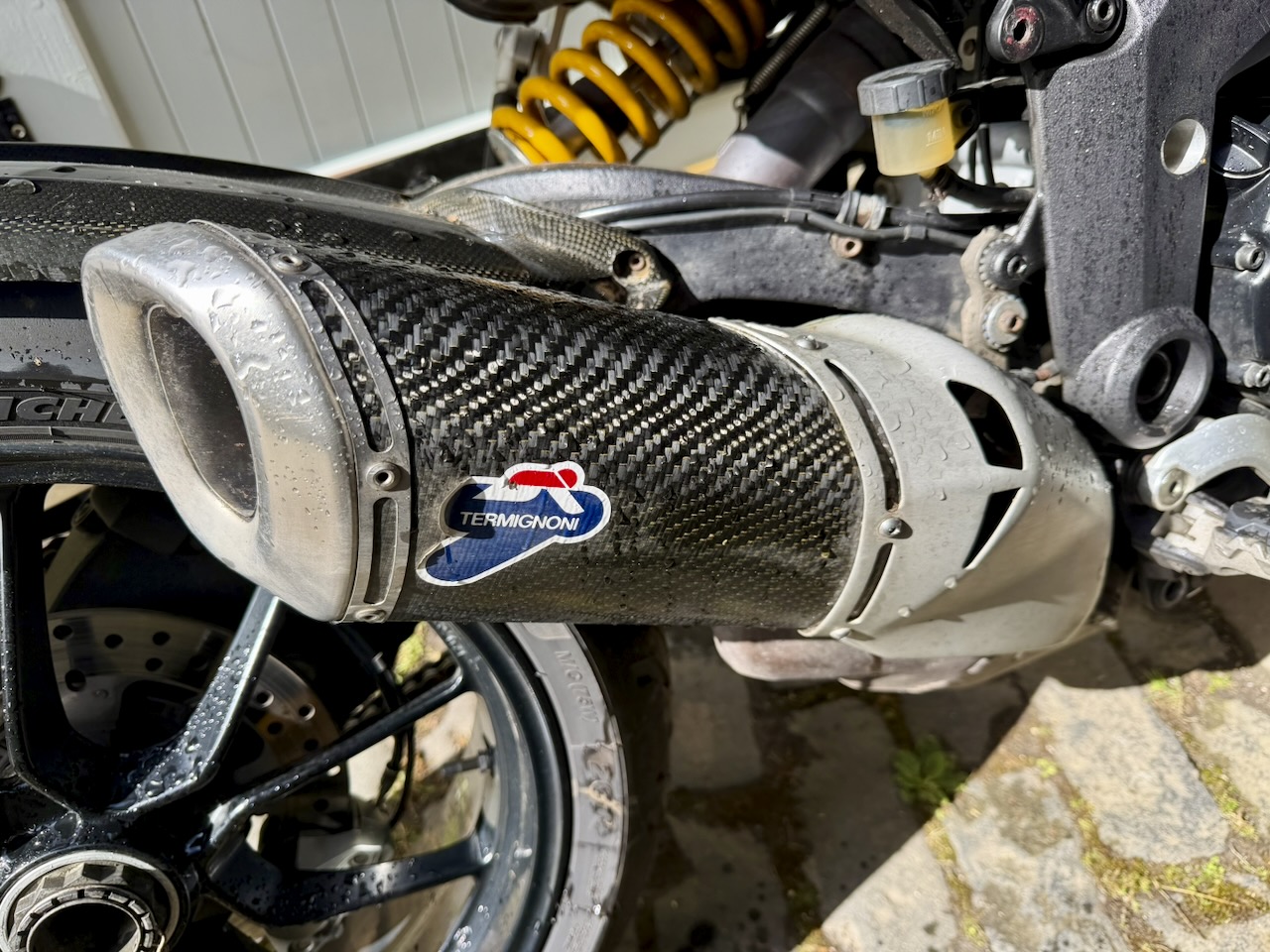
I ordered it with the factory option Termignoni end can. Which looks good, sounds much the same as the stock end can and gets in the way of the rider’s right heel. Ah well. The electronic fuel cap then makes the keyless ignition make sense: it should have been standard.
Consumables
Fuel: I’ve consistently had 43-45mpg (UK) from it, no matter how I’ve been riding and whether solo or two-up. with a 20 litre tank, that gives me 170-180 miles between fill-ups, before range anxiety kicks in. That’s OK – I’d prefer 200 miles from anything with touring pretensions, but whatever…
Tyres: the stock Pirelli Scorpions lasted 3,500 miles, after which I fitted my then favoured Diablo Rosso Corsas. Big mistake. 2,000 miles later, the Diablos (which don’t like waking up in cold Scottish mornings: like the rest of us, but more annoying) were toast: trashed by 1200cc of V-twin torque and cheesegrater Scottish roads.
I’ve been on every generation of Michelin Road since, and am well pleased with everything about them except the price. I get around 5,500 miles out of a front and 4,500-5,000 miles out of a rear. Tyres I get from Strathearn Tyres in Crieff: their prices are good and they manage to change tyres without damaging the bike. Unlike some.
Oil: for years I stuck with Ducati’s recommendation of Shell Advance Ultra but, more recently, I’ve standardised across my bikes on Motul 300V. This is lovely stuff, a translucent fluorescent green in hue, which makes it very easy to visually check its condition. I change oil and filter about every 4500 miles: cheap insurance. The bike doesn’t burn oil: 3-400ml in top-ups between changes is the norm.
Brakes & Clutch: again, I’ve standardised across my bikes: Motul RB660 Dot 4. Expensive, but it does what it says on the tin. And, barring that fecking rear brake, I’ve had zero trouble, beyond the usual patience required when bleeding an ABS system with its complex plumbing. Front brake pads lasted until I swapped the calipers at 18,000 miles (and still had plenty of wear left) and I’ve only just changed the rears at 24,000 miles.
There was a persistent issue with the stock front discs: after a few years, they developed noticeable pulsation under braking. That was down to the disc bobbins clogging with crud and thereafter resigning from their job of allowing the disc to float slightly. I developed a routine of spinning the bobbins with a power drill whilst spraying brake cleaner liberally over them. That largely kept the problem at bay but, at 23,000 miles I cracked and replaced them with Brembo Serie Oro discs. Which have been excellent so far.
Chain & Sprockets: I’m now on my fourth chain and sprocket set. This may seem excessive for a 24,000 mile bike, especially one with a Scottoiler fitted. I’d agree with that, but reasons:
The OEM Regina chain (widely regarded as being made of cheese) lasted 11,000 miles. Ducati Glasgow replaced it with a JT item which turned out to be utter junk: by 4,000 miles I’d run out of adjustment and complained, at which point JT acknowledged that they’d sent a batch out without any lubrication. It was replaced FoC, but I had to cough up to replace the new sprockets it had trashed. 5,000 miles later the replacement was going the same way, so I replaced it with a top-end DID job, with a 42-tooth Supersprox rear sprocket and a new OEM front. Zero issues since, and I’ll be giving JT a very wide berth in future.
Dealers & Servicing
This is where it gets a tad more contentious. I travelled back from Scotlandia to Alton to buy mine from Snell’s (Ducati Alton) because they’d looked after my previous bikes so well. At the time, there was but one official dealer in Scotland – Ducati Glasgow – with whom I’ve had slightly mixed experiences. Their sales end was always very friendly and helpful and I liked them a lot. And their cakes.
But it always seemed to come back from service with something wrong: paint chips, important bits that fell off on the way home because they’d not been bolted back up, overfilled oil and a bunch of other stuff that simply betokened poor process and attention to detail.
They’ve since been taken over by the Ducati Manchester group and have moved a couple of times, but the main difference I’ve seen so far is that cake and coffee are now conspicuous by their absence. Time will tell there.
Fortunately, I’m old enough to remember how to do most basic servicing and checks myself, despite my ability to do a fine Malcolm Tucker impression when trying to get at some of the more inaccessible components.
For the stuff I have neither tools nor time to do, the go-to dude in Scotland is Tyler Lunceford of North Motorcycle in Edinburgh. Like everyone else who uses him, I simply can’t recommend Tyler highly enough. Funnily enough I’d actually heard of Tyler by reputation as a “Ducati Whisperer” when I was working in New York and he was chief wrench at Ducati Brooklyn. I was delighted when casting around for an alternative to Ducati Glasgow to find that he’d done the sensible thing and moved to Scotland.
Value
In 2010 I shelled out £14,250 for the base machine, and £15,530 all in on-the-road, including end can, panniers, extended pannier lids and keyless filler cap. As of July 2026, the current equivalent is the V4S. This comes in at £21695 (without extras), £23,555 (configured roughly equivalently to mine) and, if you want Öhlins suspension and a 17″ front wheel (I do), the Pikes Peak lands £28,495, or £30,355 equivalently configured, before on-the-road costs. Ouch.
So, for years, I’ve looked with frustration and incredulity at VAG’s policy of ramping up Ducati prices until the market squeaks. Or at least, I thought they did: that was until yesterday when, wishing to include a scandalised polemic about overpricing in this post, I plugged what I paid into the Bank of England’s inflation checker. Which told me that what I paid in 2010 now equates to £22,680-£24,720: slap bang in the V4S price range. And you can argue that you get a lot more technology for your money now. Of course, whether you actually WANT that technology is another matter…
So here I eat humble (well, humblish) pie and acknowledge that Ducati has done little more with base prices than keep up with the RPI. But don’t get me started about what they charge for add-ons and ‘premium’ models.
Part II
Part 2 of this is coming, and is about what I’ve done to the bike to match it specifically to my needs and preferences. It may not be the Ship of Theseus, but it’s certainly been evolving over the years.
Leave a Reply